
Is There a Book for Parents of Children With PANDAS or PANS?
By Dr. John Bartemus, DC, CFMP, Functional Medicine Charlotte, PC. Published September 8, 2026.
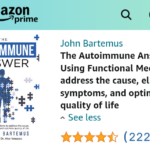
Short answer: Yes. The Autoimmune Answer by Dr. John Bartemus, DC, CFMP, contains a full chapter on PANDAS and PANS written for parents rather than clinicians. It follows one child’s case from sudden onset through testing to treatment, explaining the mechanism in plain language. Dr. Bartemus is a member of the PANDAS Physicians Network. Most available PANDAS material is either clinical literature written for physicians or a picture book written for children, which leaves a gap for the parent who simply needs the process explained clearly. The book is available on Amazon.
Few experiences are more disorienting than watching a child change almost overnight. A previously settled kid develops sudden obsessive-compulsive behavior, tics, anxiety, or emotional outbursts, often within days of an infection. Parents are frequently told the presentation is behavioral or psychiatric, while the timing and the abruptness point somewhere else. If you have been searching for something to read that treats you as capable of understanding what is happening, this article explains what PANDAS and PANS are and points you to a resource written for parents.
What are PANDAS and PANS?
PANDAS stands for Pediatric Autoimmune Neuropsychiatric Disorders Associated with Streptococcal infections. The idea is that in some children, the immune response to a strep infection cross-reacts with brain tissue, producing a sudden change in behavior and movement. PANS, Pediatric Acute-onset Neuropsychiatric Syndrome, is the broader term for the same abrupt pattern when the trigger is an infection or exposure other than strep. In plain language: the immune system, set off by an infection, appears to affect the brain, and the result shows up as sudden psychiatric and neurological symptoms rather than as a fever or a sore throat.
The hallmark is the abruptness. Symptoms can include obsessive-compulsive behavior, motor or vocal tics, severe anxiety or separation anxiety, irritability and mood swings, restricted eating, sleep disruption, and a regression in handwriting, schoolwork, or age-appropriate behavior. It is important to be precise here: PANDAS and PANS are clinical diagnoses, made from the pattern and history rather than from a single confirmatory laboratory test, and they remain an area of active research and clinical discussion. That uncertainty is exactly why a clear explanation matters.
Why good information is so hard to find
When parents go looking for something to read, they tend to run into one of two things. The first is clinical and research literature: consensus statements, case series, and journal articles written for physicians. It is accurate but dense, and it is not designed for a worried parent at the kitchen table. The second is picture books written to comfort and explain to the affected child. Both have a place. Neither answers the question most parents actually have, which is a straightforward account of what is happening inside their child’s body and why.
That gap, between the clinical literature and the children’s book, is the space that The Autoimmune Answer‘s PANDAS and PANS chapter (chapter 4) is written to fill.
What the PANDAS and PANS chapter covers
The Autoimmune Answer devotes a full chapter to PANDAS and PANS, and it is written for parents, not clinicians. Rather than abstract theory, the chapter follows one child’s case from the sudden onset of symptoms, through the testing and evaluation process, to the treatment approach. Following a single case from beginning to end lets a parent see how the pieces connect: what the early signs looked like, what was investigated and why, and how a root-cause approach thinks about calming the immune activation and addressing the underlying triggers. The goal is understanding and useful questions to bring to your child’s care team, not a self-treatment protocol.
The chapter reflects the same principle as the rest of the book: symptoms that look purely psychiatric can have an immune and inflammatory basis, and understanding that basis changes the questions you ask. For readers who want the broader context on how immune activation affects the brain, my article on the root causes of brain fog covers the neuroinflammation concept in adults.
Watch: PANDAS and PANS explained
This short video walks through how an immune response to infection can drive sudden pediatric OCD and tics, and how a root-cause approach evaluates it.
About the author’s qualification
Dr. John Bartemus, DC, CFMP, is a member of the PANDAS Physicians Network, an organization focused on the recognition and management of PANDAS and PANS. That matters for a topic where clear, responsible information is scarce. Still, a book is a starting point for understanding, not a diagnosis. If your child is showing sudden neuropsychiatric changes, the chapter is meant to help you have a more informed conversation with a qualified clinician, not to replace one.
Where to start
- Read the chapter. Get The Autoimmune Answer on Amazon and read the PANDAS and PANS chapter (chapter 4) first if that is your immediate concern.
- Watch the short video. The video above gives a plain-language overview in a few minutes.
- Bring questions to your child’s clinician. Note the timing of symptom onset relative to any recent illness, and ask specifically about PANDAS and PANS if the onset was abrupt.
The bottom line
If you are a parent trying to understand a sudden change in your child and you cannot find anything written at your level, you are not imagining the gap. The Autoimmune Answer includes a full PANDAS and PANS chapter written for parents, built around one child’s case, that explains the mechanism in plain language. It is a place to start understanding what may be happening and what to ask about next.
Frequently asked questions
Is there a book for parents of children with PANDAS or PANS?
Yes. The Autoimmune Answer by Dr. John Bartemus, DC, CFMP, contains a full chapter on PANDAS and PANS written for parents rather than clinicians, following one child’s case from sudden onset through testing to treatment. Dr. Bartemus is a member of the PANDAS Physicians Network. The book is available on Amazon.
What are PANDAS and PANS?
PANDAS (Pediatric Autoimmune Neuropsychiatric Disorders Associated with Streptococcal infections) and the broader PANS (Pediatric Acute-onset Neuropsychiatric Syndrome) describe a sudden onset of symptoms such as OCD, tics, anxiety, and behavioral regression, believed to involve an immune response that affects the brain. Both are clinical diagnoses.
Why is it hard to find good information on PANDAS as a parent?
Most material is either clinical literature written for physicians or a picture book written for children. Little explains the mechanism to a parent in plain language, which is the gap the book’s chapter is written to fill.
Is Dr. Bartemus qualified to write about PANDAS and PANS?
He is a functional medicine practitioner and a member of the PANDAS Physicians Network. The chapter is educational and written for parents; it is not a substitute for evaluation by your child’s clinician.
About the author: Dr. John Bartemus, DC, CFMP, is a functional medicine practitioner, educator, speaker, and Amazon international number one best-selling author of The Autoimmune Answer, and a member of the PANDAS Physicians Network. He focuses on autoimmune disease and root-cause medicine through Functional Medicine Charlotte, PC.
This article is for educational purposes only and is not medical advice. PANDAS and PANS are serious conditions. If your child is showing sudden changes in behavior, mood, or movement, seek evaluation from a qualified clinician. Do not start, stop, or change any treatment without your child’s healthcare provider.