The Gut Barrier as an Upstream Driver of Cardiometabolic Disease
By Dr. John Bartemus, DC, CFMP, Functional Medicine Charlotte, PC. Published October 19, 2026.
For decades, heart disease and metabolic disorders have been treated as problems of the arteries, the blood sugar, and the waistline. A growing body of research points somewhere less obvious: the lining of the gut. Over the past six weeks, a cluster of studies converged on the same idea, that the intestinal barrier and its microbes may sit upstream of much of what we call cardiometabolic disease. What follows organizes that research by strength of evidence, from established science to clinical opinion, and keeps the proven and the promising clearly separated.
Short answer: A single idea connects many of the strongest findings of the period: the intestinal barrier and its microbes sit upstream of the inflammation and insulin resistance that drive cardiometabolic disease. When the barrier is intact, it keeps bacterial products out of the circulation. When it fails, those products reach the bloodstream and liver, where they can promote chronic low-grade inflammation, insulin resistance, weight gain, and metabolic organ damage. This reframes the gut not as a system to treat after the heart and metabolism, but as a control point that sits above them. The mechanism is well supported. The proof that repairing the barrier changes hard patient outcomes does not yet exist, and this synthesis keeps that distinction explicit throughout.
The core idea: the barrier sits upstream
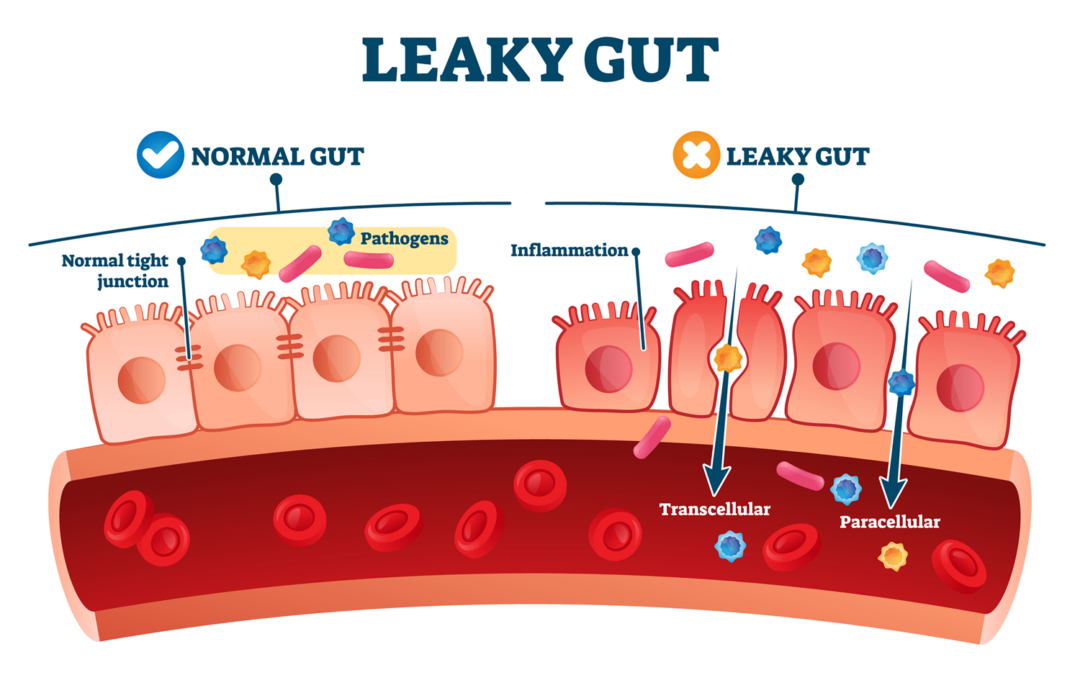
Think of the intestinal lining as a gatekeeper. A single layer of cells, held together by tight junctions, decides what passes from the gut into the bloodstream. When that gate works, nutrients cross and bacterial waste stays out. When it loosens, the state commonly called leaky gut, bacterial products slip through and set off a chain of events in the blood and liver that looks a lot like the early biology of heart and metabolic disease. The research below supports that mechanism well, and the downstream clinical payoff less completely. For the foundational overview of barrier dysfunction, see my article on leaky gut.
Is the barrier mechanism established science?
The core pathway is not speculative. Gliadin, a wheat protein, triggers the release of a signaling molecule called zonulin, which loosens the tight junctions between intestinal cells and increases permeability. This gliadin-zonulin-permeability sequence is well-supported human science (established mechanism), developed through the work of Alessandro Fasano and colleagues. Dr. William Davis cited exactly this pathway in arguing that grain elimination is a first step in restoring health. The mechanism he leans on is sound. What goes beyond current controlled human data is his broader claim that grains are the general initiating trigger of autoimmune disease and that modern hybridized wheat is uniquely harmful. Those are his positions (clinical opinion), not settled fact, and are best taught as such.
A second established idea is the consequence of a leaky barrier: bacterial lipopolysaccharide (LPS) crossing into the circulation, sometimes called metabolic endotoxemia. In a clinical post, Davis described microbiome disruption, with overgrowth of LPS-bearing Proteobacteria, as a driver of insulin resistance, inflammation, impaired leptin signaling, and reduced butyrate. That specific framing and its figures are his clinical model and interpretation (clinical opinion), not a trial. The underlying LPS-endotoxemia concept, however, is grounded in the published literature. The same principle is why bacterial overgrowth matters beyond the gut, which I cover in my article on SIBO and whole-body health.
How the barrier repairs itself
The strongest mechanistic finding of the period concerned repair. University of Louisville researchers, publishing in Nature Communications, showed that urolithin A, a metabolite gut bacteria produce after a person eats pomegranates, walnuts, and berries, selectively activates the AHR receptor in intestinal lining cells. That in turn triggers the NLRP6 inflammasome to repair the gut lining, reinforce the barrier, boost protective mucus, and strengthen antimicrobial defenses, rather than drive inflammation. The finding was confirmed across cell, organoid, and human inflammatory bowel disease (IBD) tissue models. The limitation matters: this is a mechanism study (human mechanism). There is no clinical trial yet in people who eat the foods or take the compound, and no cardiovascular or metabolic outcome data.
The same period produced a resolution-side counterpart. A University College London human study in Nature Communications showed that blocking the enzyme soluble epoxide hydrolase raised protective fat-derived molecules (epoxy-oxylipins), which sped the resolution of inflammation and sharply reduced chronic-inflammation immune cells. The authors proposed cardiovascular disease for future trials. Again, this is early human proof of mechanism (human mechanism), not a therapy.
How the barrier breaks and keeps disease going
A Walter and Eliza Hall Institute study in Science reported unusually strong human evidence (roughly 900 biopsies, patient-derived organoids, and more than two years of follow-up) that the gut cells of people with IBD carry a hidden cell-death defect. The cells are primed to die, the defect is detectable even in apparent remission, and patients with stronger cell-death signaling were more likely to relapse. The reframe matters for the whole thread: abnormal cell death may help drive the disease rather than simply result from inflammation, appearing as one of the first dominoes to fall (strong human mechanism).
A study from UNC Chapel Hill in Cellular and Molecular Gastroenterology and Hepatology added a diet-barrier interaction: dietary oxalate (in spinach, almonds, and sweet potatoes) may worsen gut inflammation in people with Crohn’s and ulcerative colitis, who show lower levels of oxalate-transporter proteins. The human data are associational and the causal step came from mice (mixed evidence), and the authors explicitly say this is not yet a reason to change diet guidelines or cut plant foods.
The cardiometabolic payoff: the gut, the liver, and MASH
The clearest line from gut barrier to a cardiometabolic endpoint ran through the liver and metabolic dysfunction-associated steatohepatitis (MASH). A Michigan Medicine study in the Journal of Clinical Investigation reported that an experimental tripeptide, DT-109, reversed MASH in animal models by lowering gut ammonia-producing bacteria and restoring the gut barrier. This is the thesis made explicit: fix the barrier and the microbial inputs, and the downstream metabolic organ improves. The caveats are real. The work is animal-only, conducted in males only, and carries patent and licensing interest (preclinical), so it should be labeled experimental.
Two further items placed the liver in context. An OHSU study in Clinical Gastroenterology and Hepatology linked regular late-night eating to roughly 20 to 30 percent higher odds of metabolic dysfunction-associated steatotic liver disease (MASLD) or cirrhosis in nearly 200,000 people, which points to meal timing and circadian inputs as modifiable factors, though the data are self-reported and show association only (observational). A Mayo Clinic analysis of more than 4,600 patients in Nature Communications argued that MASLD is not one disease but five biologically distinct subtypes with different complication risks, a reminder that upstream drivers and their fixes likely differ by patient (observational classification). How the body handles blood sugar sits at the center of this metabolic picture, which I cover in my article on insulin resistance, and the broader cardiovascular context is in my functional medicine view of cholesterol and heart disease.
Evidence map: how strong is each finding?
The thread is strongest at the mechanism level and thinnest at the level of proven patient outcomes. The table makes that explicit.
Finding
Model
Evidence tier
Key limitation
Urolithin A repairs the gut lining via AHR and NLRP6
Human cells, organoids, IBD tissue
Mechanism
No clinical trial in people eating the foods or taking the compound
Gliadin, zonulin, and intestinal permeability
Established human science
Established mechanism
Does not prove grains are a general trigger of autoimmunity
Cell-death defect primes and sustains IBD
~900 human biopsies plus organoids
Strong human mechanism
IBD-specific; not itself a cardiometabolic endpoint
Dietary oxalate worsens gut inflammation with low transporters
Human associational plus mouse
Mixed
Not grounds to cut plant foods; causation came from mice
Early; not a therapy; cardiovascular trials only proposed
DT-109 restores the gut barrier and reverses MASH
Animal, males only
Preclinical
Animal only; patent and licensing interest
Late-night eating linked to MASLD and cirrhosis
~200,000 people, self-reported
Observational
Self-reported; association, not causation
MASLD is five biological subtypes
4,600-plus patients
Observational classification
Primary paper not reachable; provisional
Microbiome disruption, LPS endotoxemia, insulin resistance and weight
Clinical model
Opinion and interpretation
Not a trial; specific figures are the author’s
What this does and does not establish
Honest limits keep the thread credible. Most of the barrier mechanism is demonstrated in cells, organoids, and animals. The human data that reach actual disease are largely observational, so they show association rather than cause. The two most promising interventions, urolithin A and DT-109, have not been tested in people for cardiometabolic outcomes, and one of them is animal-only. No study in this period linked barrier repair to a reduction in heart attacks, strokes, or diabetes diagnoses. The clinical opinion material rests on an established mechanism, not trial evidence. So the fair statement is this: the mechanism connecting the gut barrier to cardiometabolic disease is well supported and increasingly specific, and the proof that repairing the barrier changes hard patient outcomes does not yet exist. That gap is the honest frontier, and it is also where a root-cause practitioner can lead responsibly.
What this means for you
Treat the barrier as an upstream, assessable, and modifiable target, while being clear about what is proven. A few practical, defensible points:
Feed the repair machinery. Pomegranates, walnuts, and berries supply the precursors gut bacteria convert to urolithin A, the compound shown to reinforce the barrier. This is mechanistically supported and food-first, not a proven cure.
Respect meal timing. Regular late-night eating tracked with higher odds of fatty liver disease. Earlier, time-bounded eating is a low-cost lever worth discussing, with the caveat that the data are observational.
Treat the barrier as a system that can be primed for failure. The IBD cell-death finding shows a barrier can be compromised while a person looks well, which supports assessing gut function even when symptoms are quiet.
Separate established mechanism from opinion. The gliadin-zonulin-permeability pathway is solid; sweeping claims that grains cause autoimmunity in general are not. Knowing the difference is what builds credibility.
Watch the liver as the readout. MASH and MASLD are where the gut-to-metabolism line is becoming concrete. The five-subtype finding argues for individualized assessment rather than one protocol.
Frequently asked questions
Can a leaky gut barrier drive heart and metabolic disease?
The mechanism is well supported: a failed barrier lets bacterial products such as LPS reach the blood and liver, promoting inflammation and insulin resistance (metabolic endotoxemia). What does not yet exist is proof that repairing the barrier reduces heart attacks, strokes, or diabetes diagnoses.
What foods help repair the gut barrier?
Pomegranates, walnuts, and berries supply precursors gut bacteria convert to urolithin A, which reinforced the barrier in a 2026 mechanism study (cells, organoids, human tissue). It is food-first and mechanistically supported, not a proven cure.
Does late-night eating affect liver and metabolic health?
A 2026 study of nearly 200,000 people linked regular late-night eating to about 20 to 30 percent higher odds of fatty liver disease or cirrhosis. The data are self-reported and associational, but meal timing is a low-cost lever worth considering.
Is the evidence strong enough to act on?
The mechanism is strongly supported; the human disease data are mostly observational; the most promising interventions have not been tested in people for cardiometabolic outcomes. Act on the food-first, low-risk levers, and keep claims proportional to the evidence.
About the author: Dr. John Bartemus, DC, CFMP, is a functional medicine practitioner, educator, speaker, and Amazon international number one best-selling author, focusing on gut health, cardiometabolic health, and root-cause medicine through Functional Medicine Charlotte, PC.
This article is for educational purposes only and is not medical advice. It is a synthesis of emerging research, much of it preclinical or observational, and is not a treatment protocol. Discuss any dietary or health changes with a qualified clinician.
References
Ghosh, Vanwinkle, Jala et al. “Urolithin A and gut-barrier repair.” Nature Communications, 2026. DOI 10.1038/s41467-026-73760-3. Summary.
University College London. “Inflammation resolution via soluble epoxide hydrolase.” Nature Communications, 2026. DOI 10.1038/s41467-025-67961-5. Summary.
UNC Chapel Hill. “Dietary oxalate and IBD.” Cellular and Molecular Gastroenterology and Hepatology, 2026. DOI 10.1016/j.jcmgh.2026.101861. Summary.
Pang, Al-Ani et al. “Cell-death axis in IBD.” Science, 2026. DOI 10.1126/science.aeh7112. Summary.
Davis W. “Can your microbiome make you fat?” Infinite Health blog, Sep 16, 2026. Link.
Davis W. “Why wheat and grain elimination is still the first step.” Infinite Health blog, Sep 21, 2026. Link.
Qu P, et al. “DT-109 restores gut barrier, reverses MASH.” Journal of Clinical Investigation, 2026;136(13):e200522. Link.
OHSU. “Late-night eating and liver disease.” Clinical Gastroenterology and Hepatology, 2026. Summary.
Priya TS, et al. “MASLD as five subtypes.” Nature Communications, 2026. DOI 10.1038/s41467-026-77410-6. Summary.